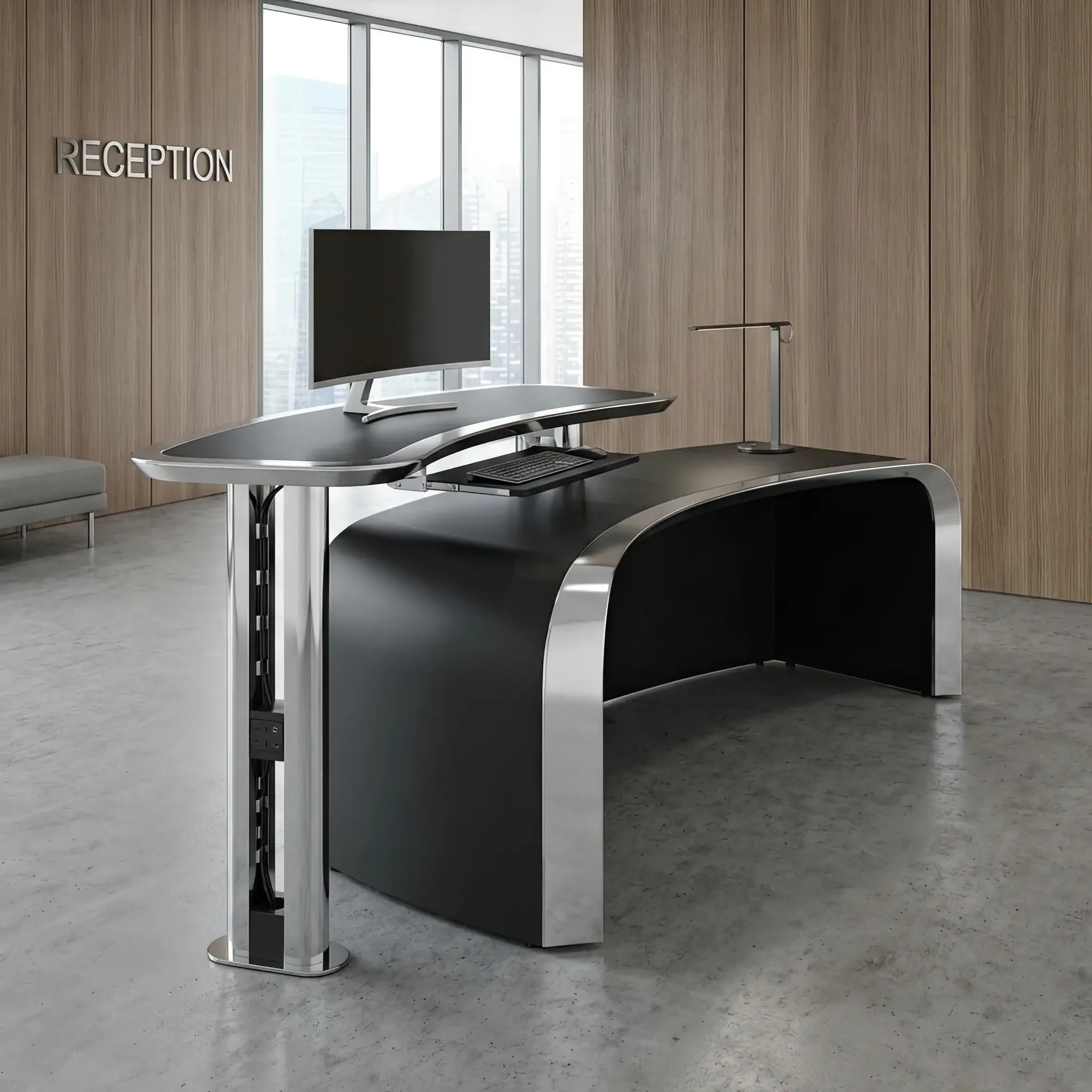
Reception dimensions aren't just figures in a technical specification; they are the mathematics of comfort and the psychology of first contact. A desk that's too high creates a barrier and overwhelms the guest; one that's too low deprives the administrator of privacy. In 2026, lobby ergonomics account for not just standard regulations but also inclusivity, IT integration, and long staff shifts. We examine gold standards for height (1100-1200 mm), countertop depth, and why 'designer' dimensions can become an operational nightmare if human anatomy isn't considered.
Two-Level System: Guest vs. Administrator
A classic reception desk consists of two levels. The top level (guest counter) in 2026 is fixed at a height of 1100-1150 mm. This is the optimal point for a guest to comfortably lean or sign a document. The lower level (administrator's workspace) is set at 720-750 mm. It's vital to provide a 'visual break' between levels — this hides wires and staff personal items, preserving the facade's aesthetic purity.
Depth and Reach Zones: The Mathematics of Movement
Comfort at Arm's Length
The depth of the workspace should be at least 600-800 mm. This is sufficient for placing a monitor, keyboard, and documents without a sense of tightness. We design 'active reach' zones so administrators can reach any control button or terminal without leaving their seat. In 2026, we pay special attention to knee space — it must allow the chair to rotate freely, which is critical for preventing staff back strain.