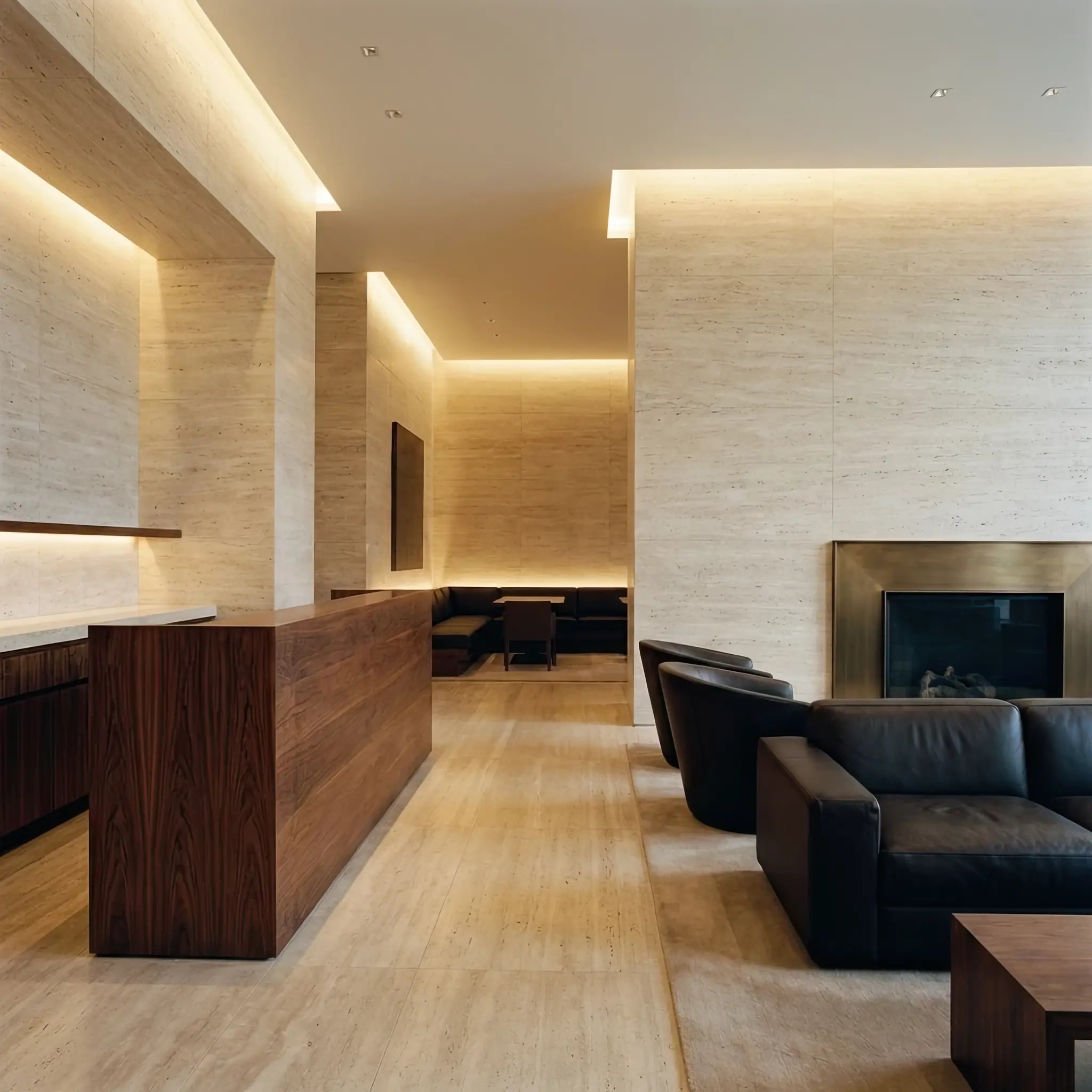
In 2026, light has ceased to be just an illumination fixture—it has become a tool of neurobiology. We present Neuro-Aesthetic Lighting Optimization. At Reception Space, we design lighting scenarios that directly influence melatonin and dopamine production, managing the stress and concentration levels of guests and staff. This is light that 'feels' your brain and adapts to its rhythms. We explore how photons create an atmosphere of success and well-being.
Biological Resonance: Circadian Rhythms 2.0
In 2026, lobby lighting at Reception Space is fully synchronized with the human biological clock. In the morning, the system emits high-intensity blue spectrum, blocking melatonin and gently 'awakening' visitors. By evening, the light warms, the spectral composition shifting to amber, mimicking sunset and lowering stress levels. This allows guests to feel alert during meetings and calm upon their conclusion, significantly boosting satisfaction with their stay in the business center.
Cognitive Design: Light for Productivity
Managing attention through contrasts
2026 neuro-optimization utilizes principles of focal attention. In Reception Space projects, we highlight key zones with light (reception desk, navigation areas) using spectral peaks that the brain perceives as priorities. This reduces cognitive load: a guest doesn't need to search for their destination, their eyes lead them. This is perfect space ergonomics, where lighting acts as an invisible navigator and assistant.