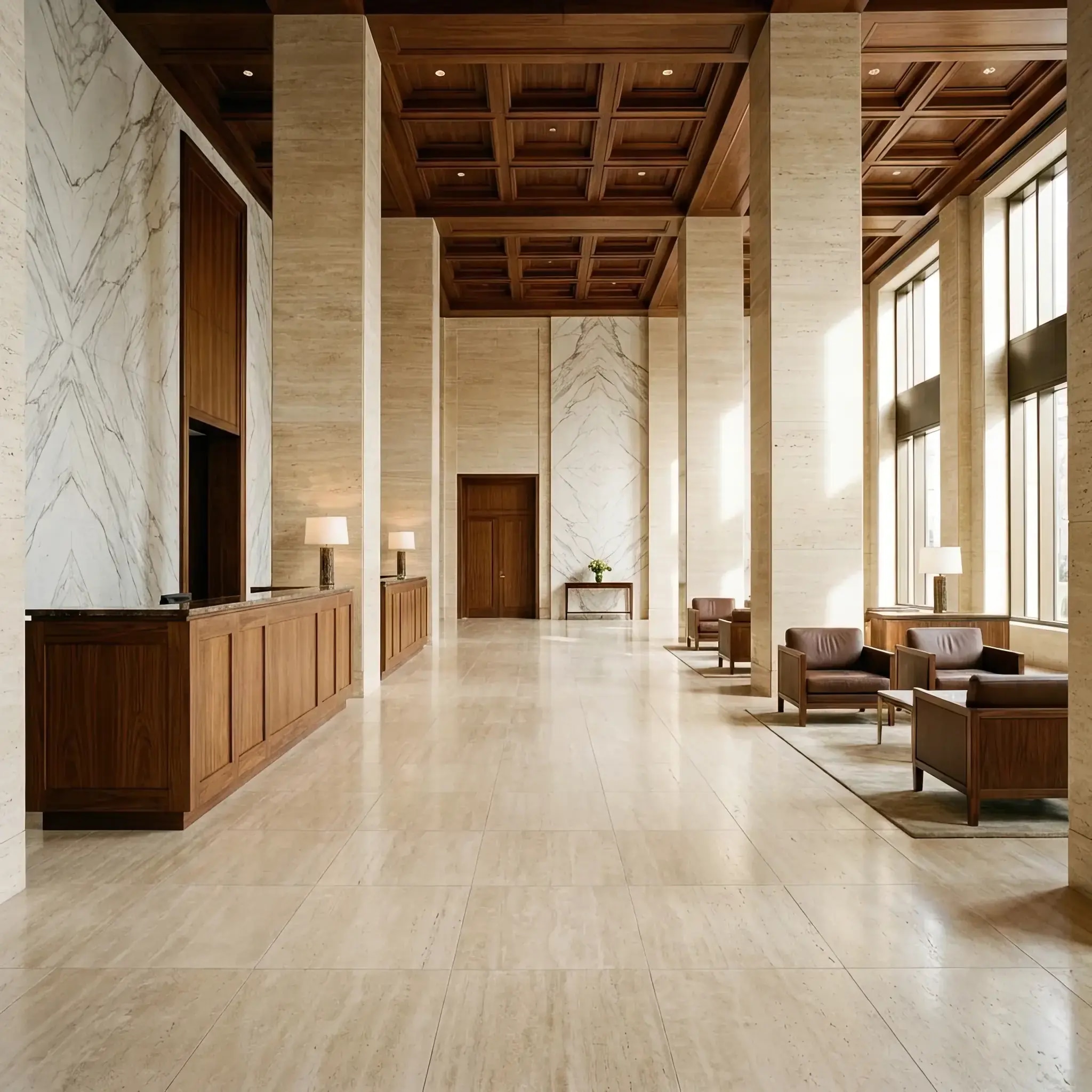
In 2026, the concept of 'luxury' is inextricably linked with responsibility. Projects that ignore LEED or BREEAM ecological standards lose value and status. We examine how recycled stone and innovative bio-resin composites create aesthetics that surpass natural slabs.
Circular Design: The Second Life of Marble
Every year, during natural stone extraction, up to 40% of the material goes to waste as chips and dust. In 2026, we apply 'Re-Cast' technology, which allows recreating solid masses from this scrap using innovative bio-polymers as a binder. The result is a material stronger than natural stone, yet composed of 100% recycled raw materials.
The aesthetics of such solutions are the 'new terrazzo.' Instead of chaotic splotches, we create ordered gradients that mimic water flows or geological layering. Each desk becomes a unique statement for the planet's defense.
Mycelium and Bio-Resin Composites
Growing Architecture
One of the most radical and sought-after materials of 2026 is mycelium. We use it to create internal structures and acoustic panels for reception desks. Mycelium is not only ecological but also possesses fantastic sound-absorbing properties, critical for noisy lobbies.
The outer surfaces of such desks are coated with 'EcoGlaze' bio-resin, produced from wood industry waste. It provides the depth and gloss of premium lacquer but is completely hypoallergenic and biodegradable at the end of the product's lifecycle.