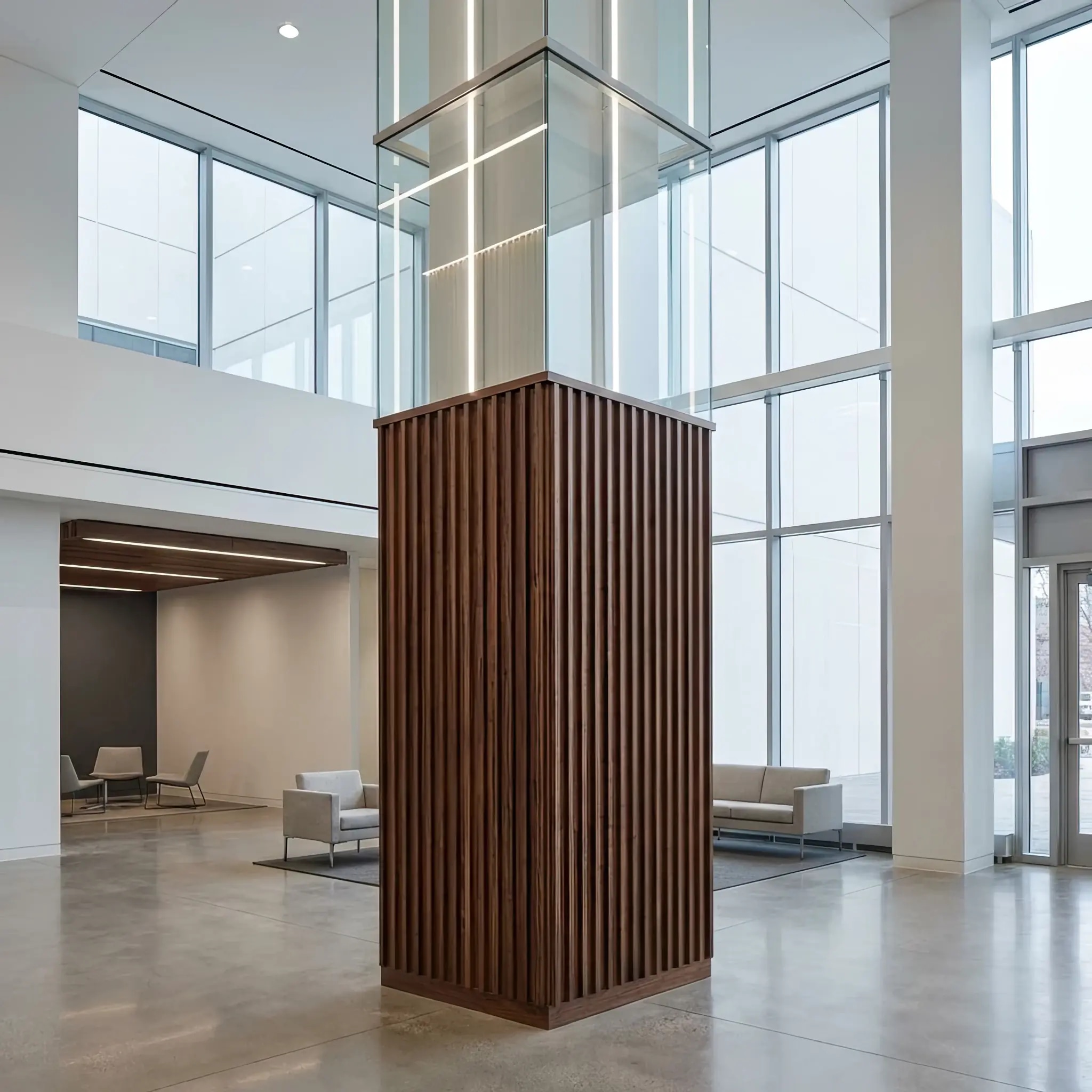
In 2026, buildings have gained a nervous system. We present Smart Composite Structural Frames—load-bearing structures that sense load, temperature, and wear. At Reception Space, we use aerospace-grade composites with integrated fiber optics to create ultra-lightweight and ultra-intelligent lobbies. This is architecture that reports its own status, guaranteeing an unprecedented level of safety. We explore how carbon fiber and sensing technology are changing the very concept of building reliability.
The Building's Nervous System: Fiber Optics in Composites
2026 technology allows for thousands of Fiber Bragg Grating sensors to be baked directly into the carbon-fiber frame structure. In a Reception Space lobby, these columns and beams continuously transmit data to a cloud AI. The system reads micro-deformations, vibrations, and thermal stresses with micron precision. This allows for identifying any issue years before it manifests, transforming building maintenance from reactive to predictive. The building literally 'tells' engineers how it's feeling.
Ultra-Lightweight Geometry: Strength Without Weight
Titanium might at a feather's weight
In 2026, smart composites are 5 times stronger than steel while being 4 times lighter. In Reception Space projects, this opens the possibility of creating vast, open lobby spaces without massive columns obstructing the view. Slender, elegant smart-carbon supports hold the colossal loads of atriums, creating the effect of a 'floating' roof. This is the aesthetics of freedom, backed by mathematical calculation and aerospace materials.