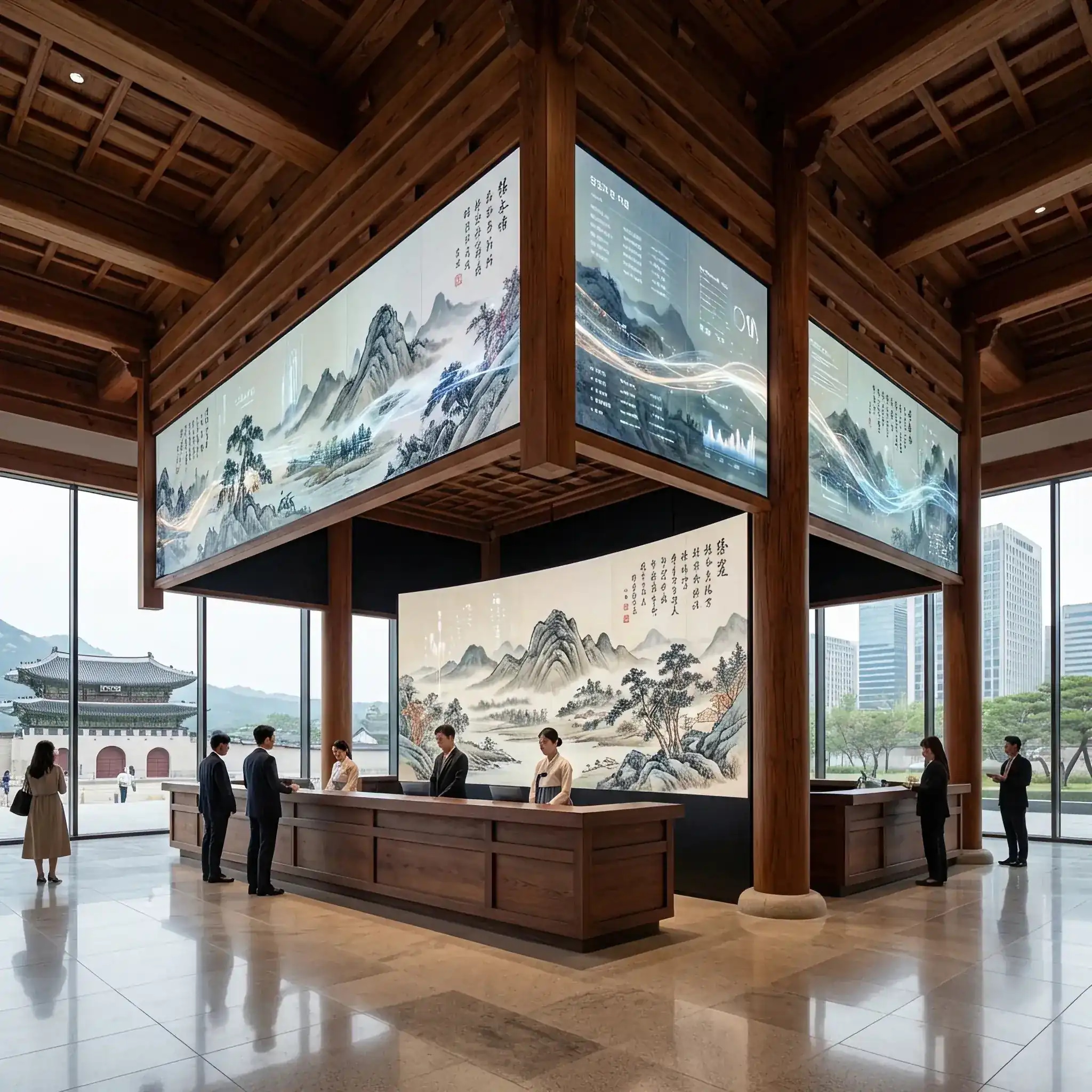
Seoul is a time machine working in two directions. In 2026, Korean lobby design is 'Digital Heritage'. We see a return to traditional materials (wood, Hanji paper, granite) but in a completely new, digital interpretation. We explore the 'Cyber-Hanok' trend: receptions with curved roofs under which holograms float, and the use of Celadon ceramics in the finishing of Gangnam's most advanced IT offices.
Hanji and Pixels
Korean Hanji paper has been used for windows for centuries. Today, we laminate it between glass layers, creating semi-transparent reception facades that serve as screens. The paper's soft texture smooths the pixel grid, making digital images warm and tactile. This is a unique Korean experience: you look at an ancient material but see stock quotes or digital art.
Aesthetics of Emptiness (Yeobaek)
Digital Void
Like Japan, Korea values emptiness. But Seoul's emptiness is dynamic. We design huge white lobby galleries where the only object is a microscopic island desk. All navigation and branding are realized via AR (Augmented Reality), accessible through guests' glasses or lenses. This is 'invisible design' revealed only upon digital contact, highlighting the status of the world's tech capital.