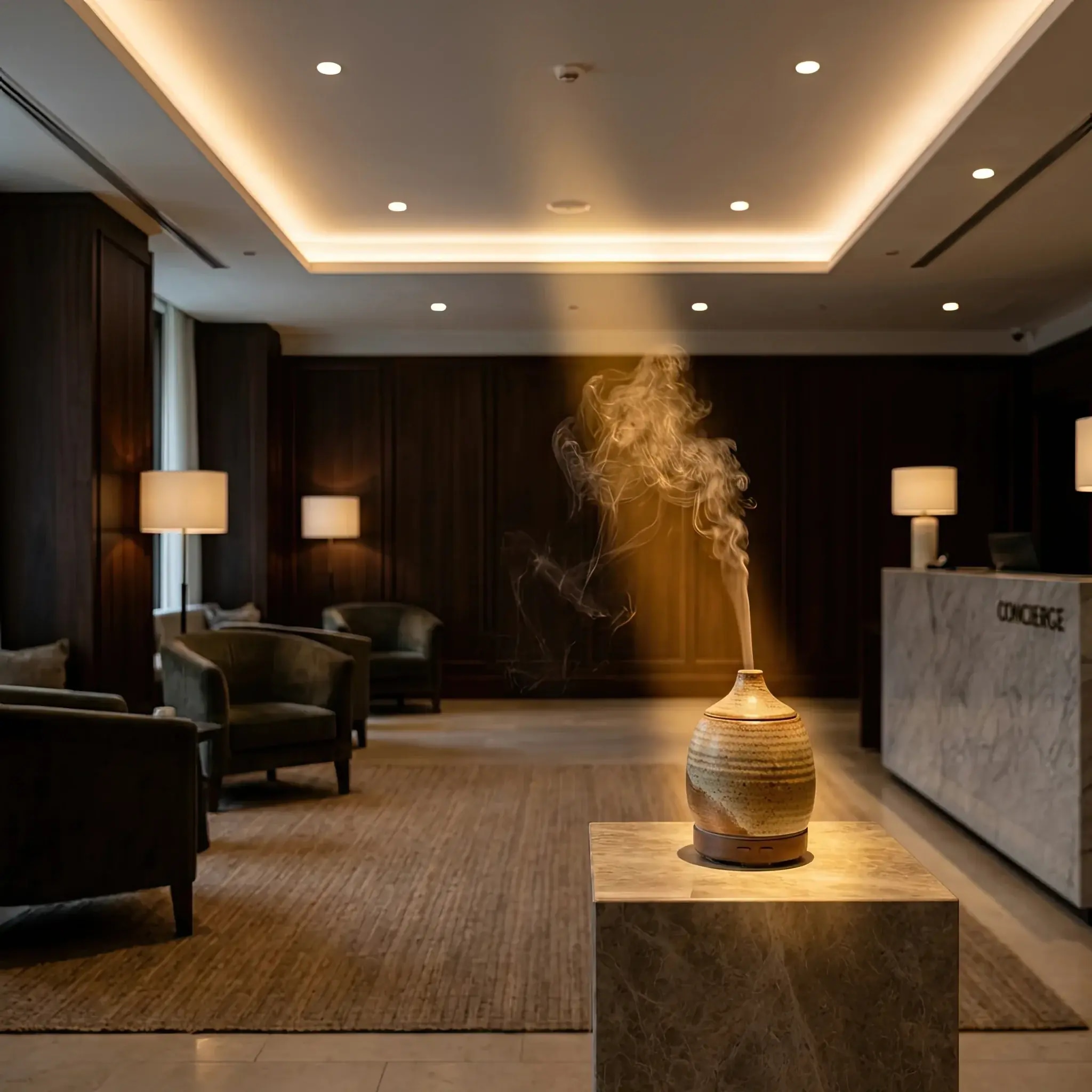
In 2026, navigation has moved beyond visual signage. Olfactory navigation is the use of zonal scents to manage the movement of people within a space. We examine how, using finely tuned aromatic profiles, a guest intuitively finds their way from the reception to the elevators or to the lounge area without being distracted by reading signs, and why this creates a sense of 'seamless' service.
The Intuitive Route: The Power of Aroma Markers
Our brain reacts to scents faster than to any visual information. In large lobbies, we design a 'dry diffusion' system that creates clear boundaries between functional zones. For example, the reception area might have a fresh, energetic scent of citrus and white tea, while the path to the elevators is marked by subtle notes of sandalwood. The guest subconsciously follows the aromatic gradient, which reduces anxiety levels in a new space and makes navigation natural.
Zonal Separation: Invisible Walls
Managing the olfactory trail
The main challenge in 2026 is preventing the mixing of scents. We use precision nozzles with directed flow and localized ventilation systems. This allows us to create an 'aromatic capsule' in the waiting zone—for example, with a 'luxury hotel' scent (leather, tobacco, amber)—that does not penetrate the administrators' work area. Such separation works more effectively than any partitions, creating a psychological sense of privacy and comfort.