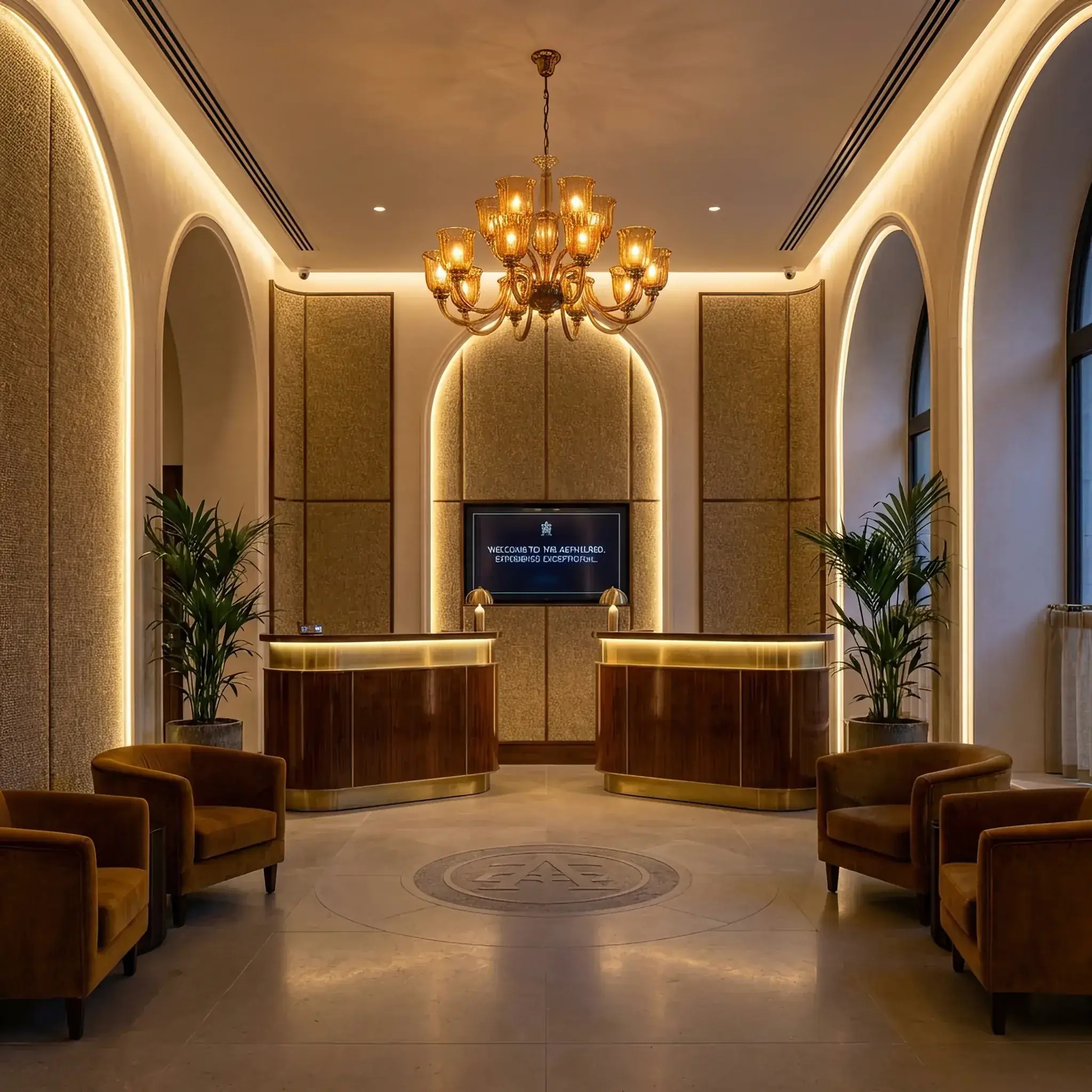
In 2026, an interior has ceased to be mere decoration. It has become a tool of behavioral psychology. The first point of contact — the reception zone — shapes an opinion of the company before the administrator even speaks a greeting. We examine how form, light, and materials affect a guest's subconscious and how to create a space that communicates success and reliability.
The 7-Second Rule: Neurobiology of Impression
The human brain spends less than 7 seconds on the primary evaluation of safety and status in a new environment. In 2026, we utilize neuroarchitecture principles to make this impression positive. Ceiling height, light intensity, and even furniture symmetry are read by the guest as signals of company stability.
We design reception desks with an open frontal node. This removes the psychological barrier between employee and visitor, replacing it with a sense of openness and readiness for dialogue. In 2026, 'securitization' is a sign of insecurity, while 'transparency' is a sign of strength.
Materials as Competence Markers
Tactile Marketing
In 2026, we place immense value on tactility. When a guest touches natural stone or warm brass, their brain registers 'authenticity.' Using imitations (plastic-marmoreal) in the premium segment is reputational suicide. The subconscious instantly reads the falsehood, transferring that feeling to the company's services.