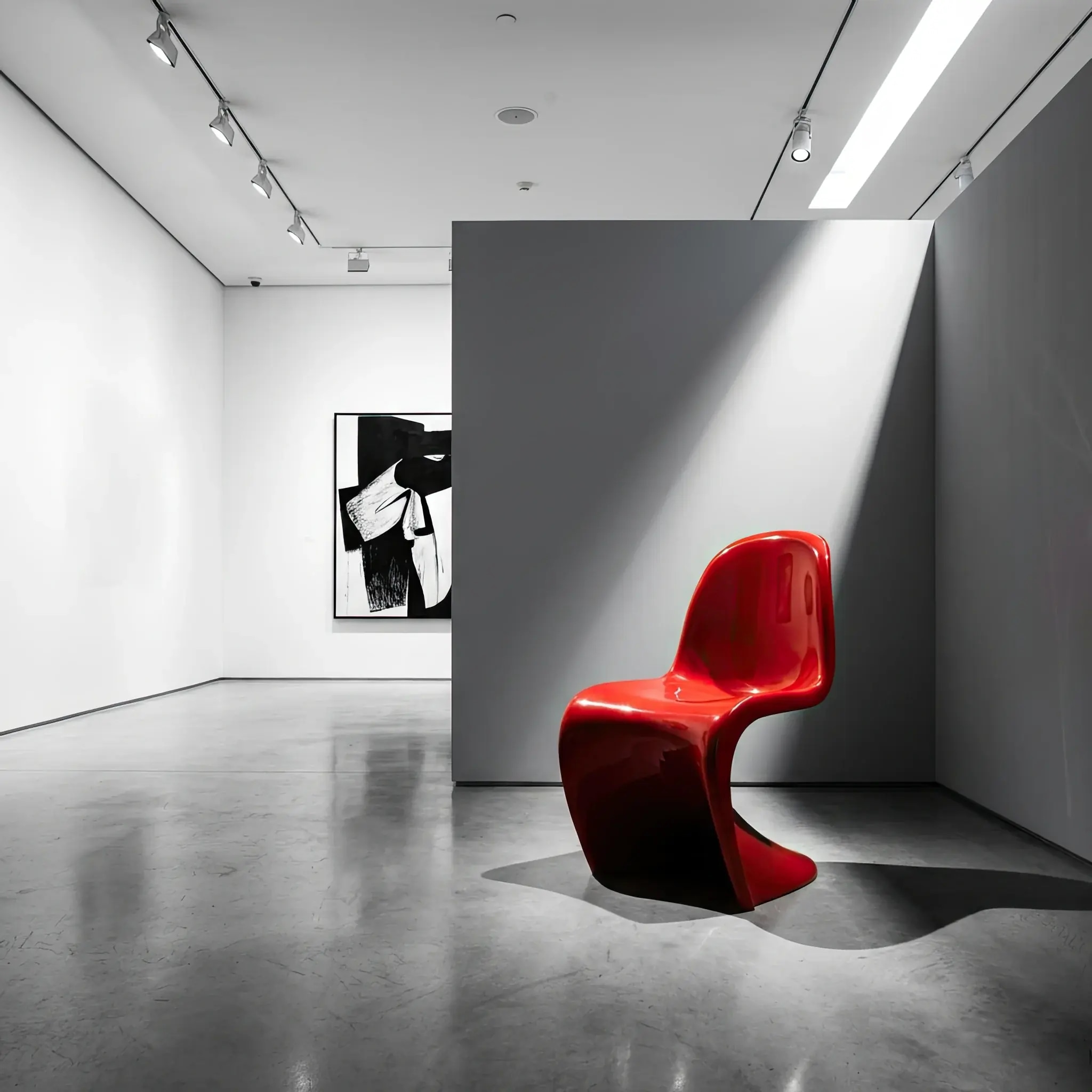
Certain objects change a space simply by being there. The Panton Chair — the world's first single-piece plastic cantilever chair, created by Verner Panton in 1959. In 2027, this chair remains the most recognizable silhouette in the design world. We examine why its fluid S-shaped form is ideal for reception zones and how to use this bold accent to liven up the strictest corporate interior.
Verner Panton: The Dream of a Single Form
Panton spent a decade finding a technology to mold a chair in one piece. Together with Vitra, he achieved a revolution in 1967, launching serial production. The chair resembles a human body in motion — it has no legs or back in the usual sense, only a single, fluid line. It's a perfect example of how 60s optimism transformed into a 21st-century classic.
Materials: From Polyurethane to Polypropylene
Different Facets of One Icon
In 2027, Vitra produces two versions: Panton Chair (matte polypropylene) and Panton Classic (rigid polyurethane foam with glossy lacquer). For high-traffic reception zones, we recommend the matte version—it's indestructible, easy to clean, and scratch-resistant. The glossy classic is for art centers and fashion brands, where the chair acts as a precious object reflecting light and attracting attention.