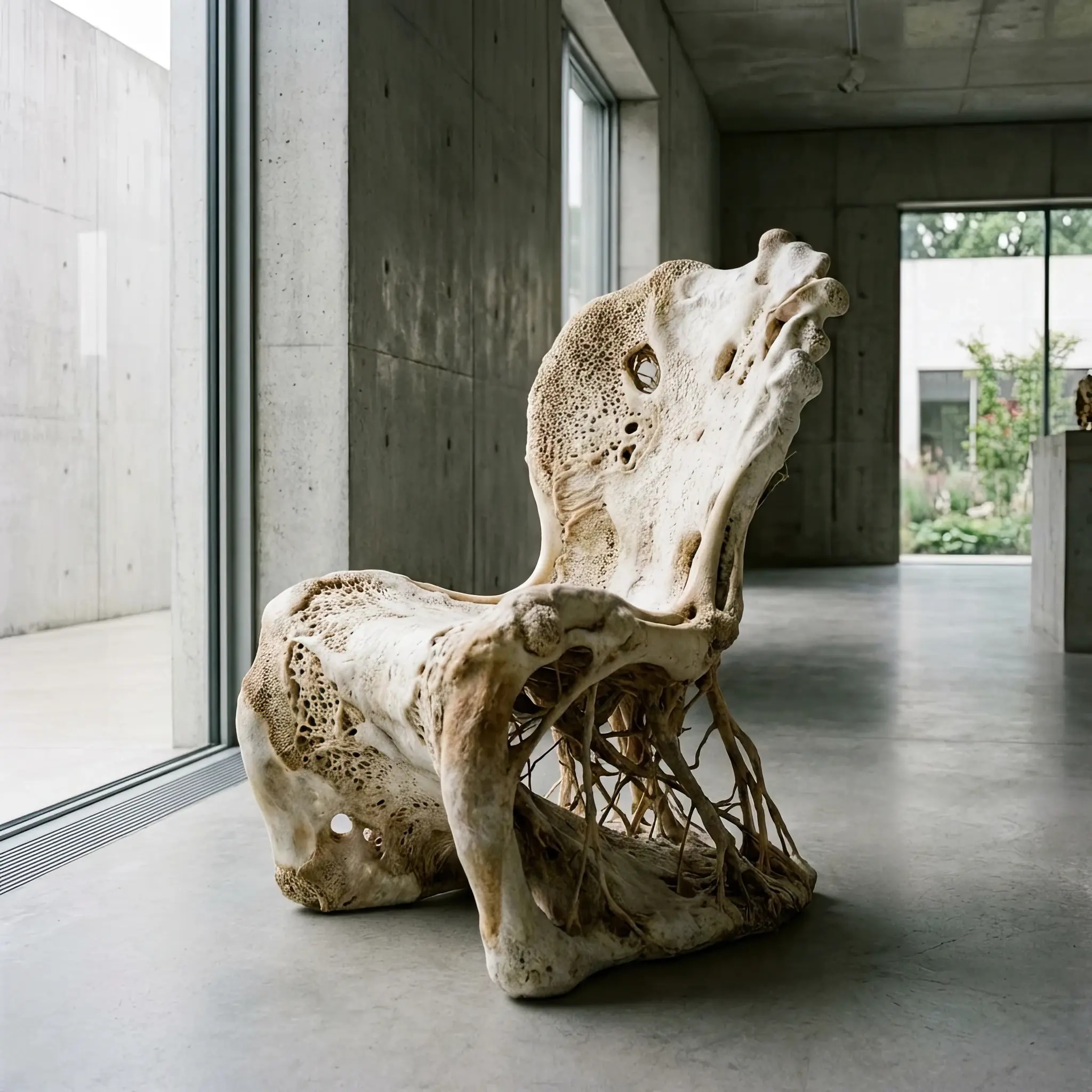
In 2026, we've stopped building furniture—we've started growing it. Mycelium (the root system of fungi) has become a revolutionary material in sustainable lobby design. It's a living composite that grows into a shape defined by the designer, consuming agricultural waste and transforming it into an ultra-light, strong, and fire-resistant material. At Reception Space, we create interiors where nature is not just a decoration but the structural skeleton of the space. We explore how fungal technologies are changing our perception of luxury and ecology.
Bio-Assembly: How to Grow a Sofa
The process of creating mycelium furniture in 2026 resembles alchemy. Fungal spores are mixed with an organic substrate (hemp, straw, sawdust) and placed in a 3D-printed mold. Within 7-10 days, the mycelium completely 'eats' the substrate, creating a dense, velvety structure. Afterward, the material undergoes thermal treatment to stop the growth. The result is an object with a unique organic geometry that's lighter than plastic yet stronger than wood, possessing a zero carbon footprint.
Acoustics and Safety: Nature's Insulator
Fungal walls for perfect silence
Mycelium possesses outstanding acoustic properties. Its porous structure absorbs up to 95% of sound waves across a wide frequency range. In 2026 lobbies, we use mycelium wall panels to create zones of absolute acoustic comfort. Furthermore, this material is naturally fire-resistant—when exposed to open flame, it chars, creating a protective layer that does not support combustion or emit toxic gases, unlike synthetic foams.