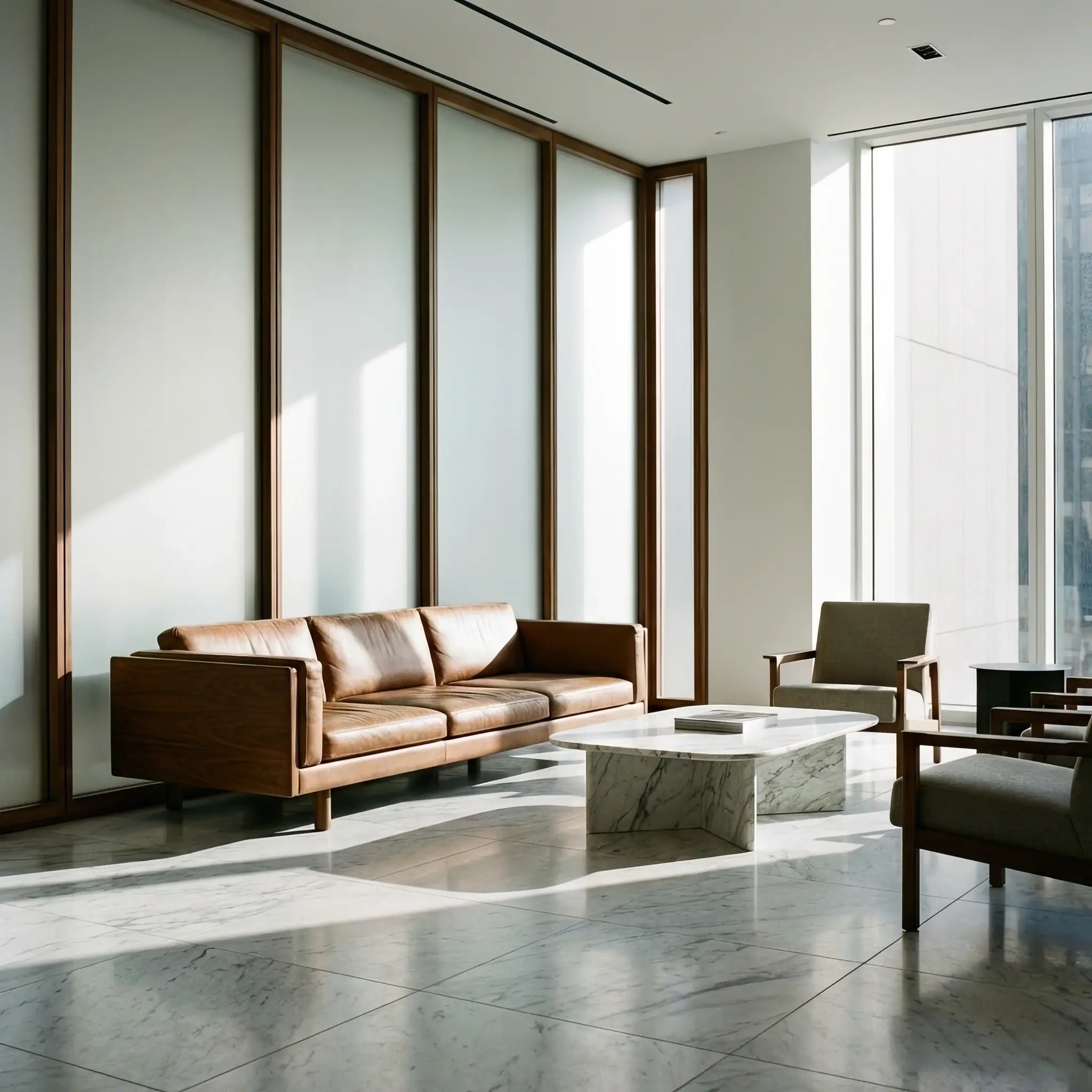
In 2026, walls are no longer static barriers. We present Liquid Crystal Glazing—a technology allowing space transparency management with a single click or an AI command. Unlike older films, modern LC glasses ensure absolute frostiness in just 0.1 seconds. At Reception Space, we integrate these solutions into meeting zones and lobby facades, creating an intelligent balance between openness and confidentiality. We examine how liquid crystals are changing architectural flexibility.
Transparency Mechanics: Crystal Orientation
2026 LC glazing technology is based on a layer of liquid crystals sandwiched between two conductive glass layers. In a resting state, the crystals are randomly oriented, scattering light and making the glass frosted. When a weak electric current (just a few volts) is applied, the crystals instantly align, allowing light through and making the surface perfectly transparent. This is visibility control at a molecular level that consumes less energy than a standard LED bulb.
Privacy on Demand: AI Control
Automated space zoning
In 2026 Reception Space projects, LC glass is integrated with face and voice recognition systems. As soon as a group enters a meeting room, the glass automatically frosts, providing visual isolation. Once the meeting ends, it regains transparency, maintaining the lobby's sense of spaciousness. This eliminates the need for curtains or blinds, creating a clean, minimalist look highly valued in modern premium design.