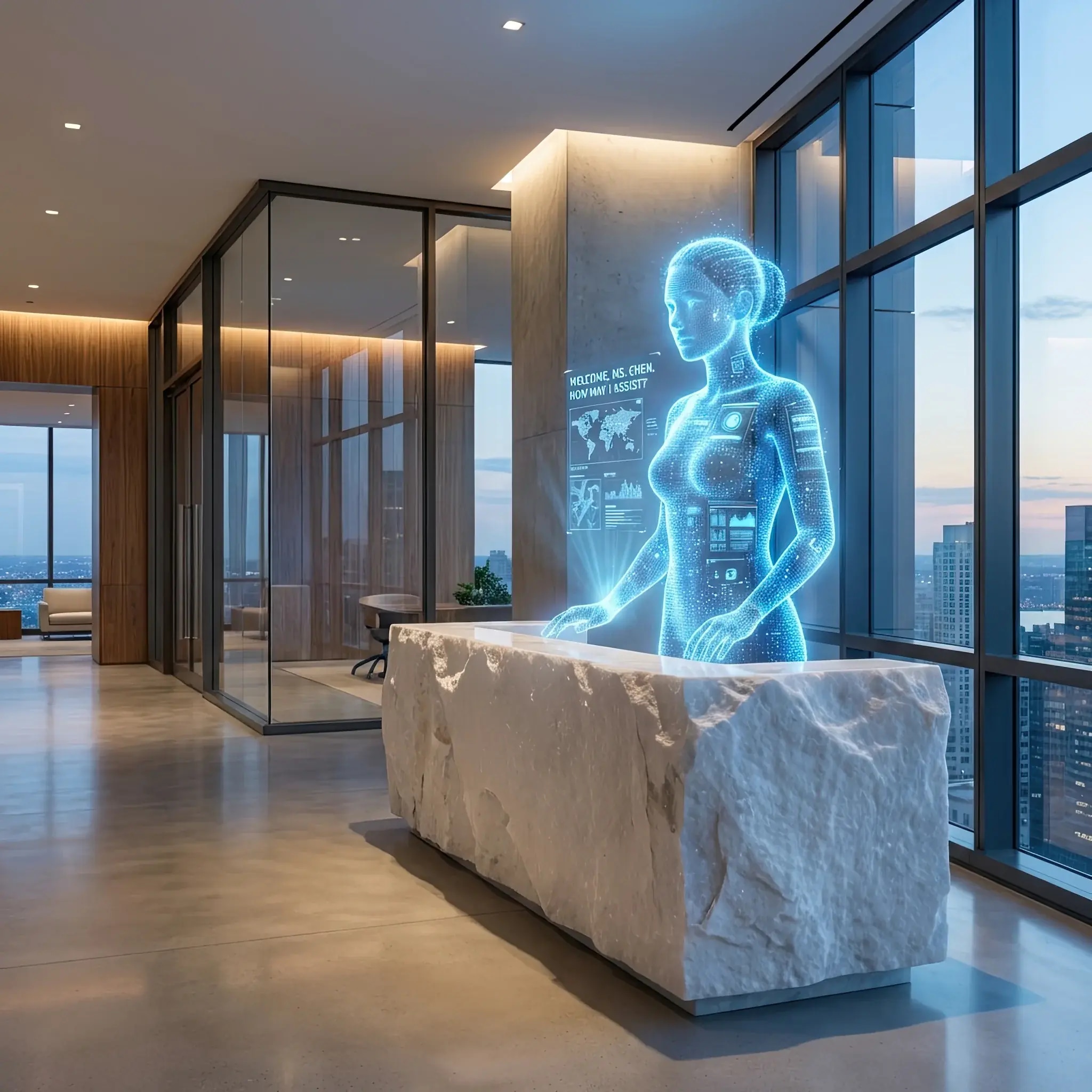
In 2026, flat screens are fading into the past. Touch panels are being replaced by volumetric displays (light fields) creating 3D holograms. The 'Holographic Concierge' is not just a pretty picture; it's a full-fledged AI employee looking you in the eye, recognizing emotions, and speaking 100 languages. We explore how to design a 'podium' for a hologram so it looks material, and why the hybrid model (human + AI) is becoming the gold standard of service.
Podium for Light
A hologram requires a special background. We design reception zones using absolute black, matte materials (Vantablack, velvet) that absorb excess projector light. The desk itself turns into a technical hub hiding light field emitters. The main goal is to create the illusion that the AI assistant stands on the floor like a living person, not floating in mid-air. For this, we use smoke micro-curtains and real-time laser calibration.
Empathic AI
More Than a Chatbot
Modern holograms read guest micro-expressions. If you're upset, the avatar changes tone and offers water. In lobby design, this means installing complex camera and LIDAR systems along the entrance group perimeter. We integrate these sensors into architectural decor so technology is invisible but all-seeing. A holographic concierge can serve 50 guests simultaneously, projecting a copy for each individually (multi-view technology).