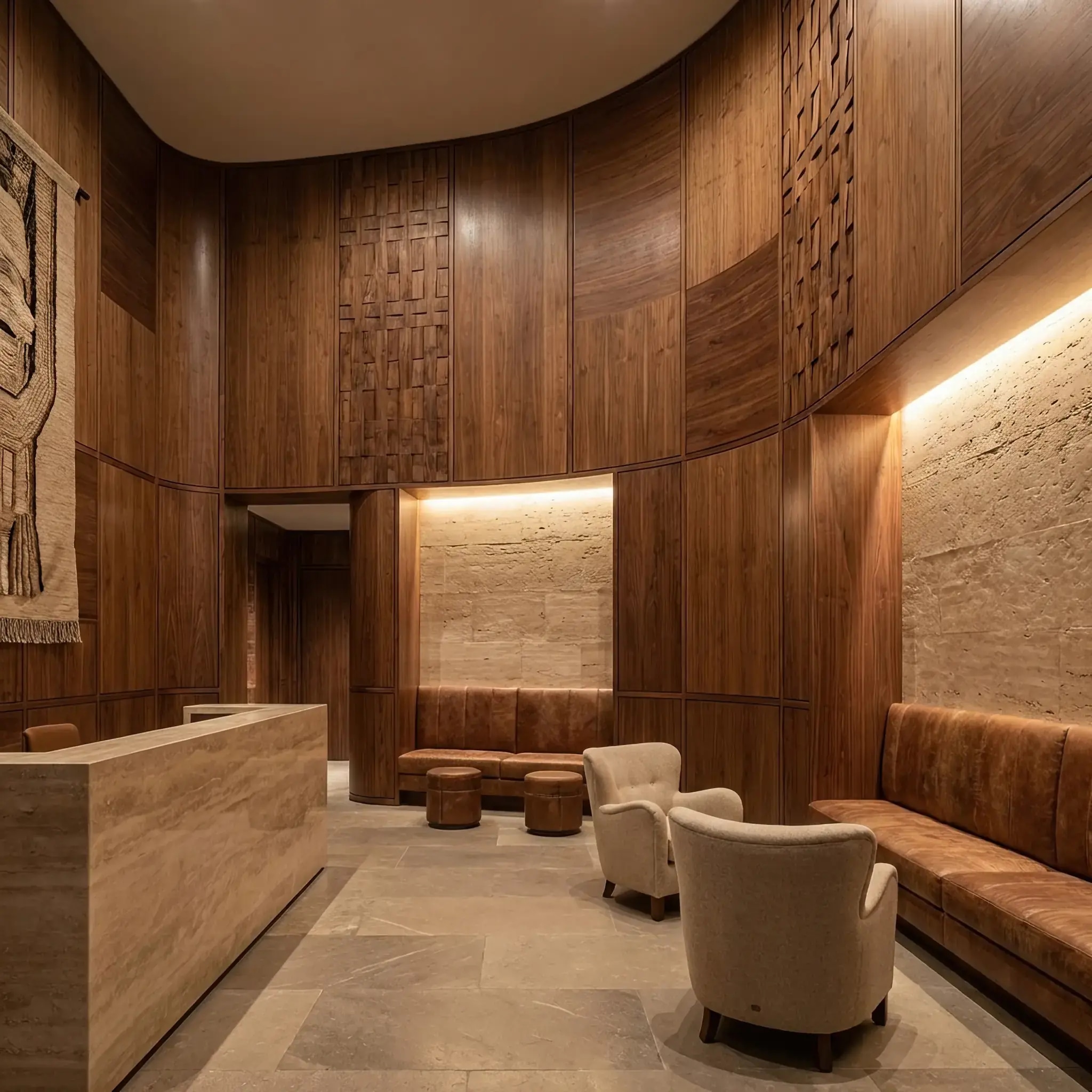
In a world saturated with visual stimuli, touch is becoming a new channel of communication. In 2026, lobby walls have ceased to be static decorations. Thanks to the integration of piezoelectric actuators and ultrasonic emitters, surfaces can now change their texture in real-time, conveying information to the guest through physical touch. We examine how haptic feedback transforms waiting into a unique sensory journey.
The Physics of Contact: From Glass to Digital Skin
Haptic feedback technology in the lobby interior allows guests to 'feel' the brand in a literal sense. When a visitor touches an information panel or even simply passes their hand near a wall, the intelligent system creates micro-vibrations simulating various materials: from velvet to cold stone. This creates a sense of depth and spatial complexity that cannot be conveyed via a monitor or standard lighting. We design these systems as part of the building's 'digital skin,' making architecture alive and responsive.
Ultrasonic Air: Touch Without Contact
Intuitive gesture control
One of the most impressive trends of 2026 is contactless haptic feedback. Using arrays of ultrasonic sensors, the wall directs focused beams of air that a person feels as physical resistance or pulsation in their palm. This allows for controlling reception interfaces with simple mid-air gestures, receiving clear mechanical confirmation of every action. In an environment of increased hygiene requirements, this solution is becoming the gold standard for elite business centers.