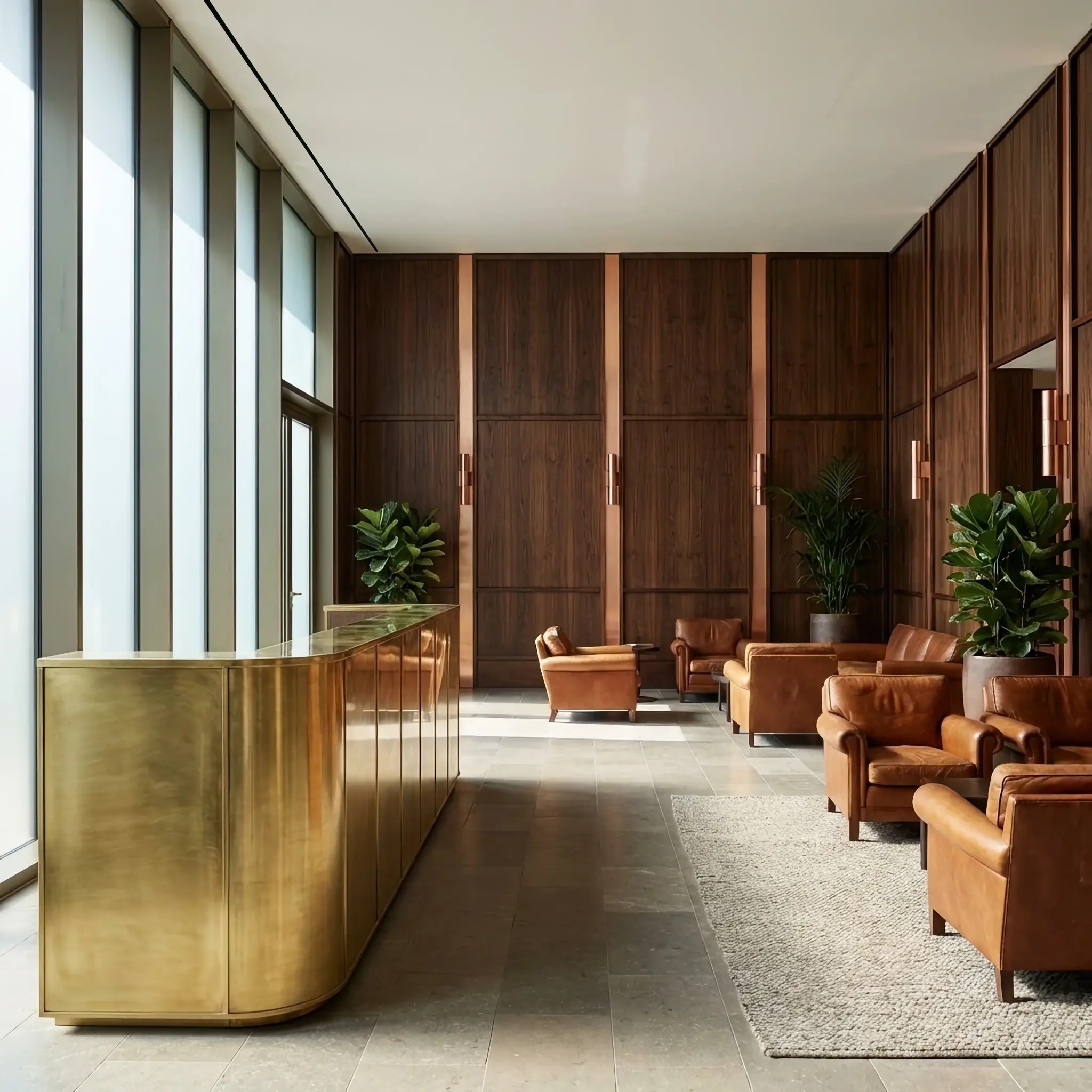
In 2026, copper and its alloys have returned to public spaces not only as a symbol of luxury but as a powerful biosecurity tool. In an era of new healthcare challenges, materials with natural pathogen-destroying capabilities have become the gold standard for high-traffic entrance zones. We examine the physics of copper's antimicrobial action and its application in modern design.
Natural Antibiotic: How It Works
Copper is the only solid material approved by the EPA (Environmental Protection Agency) as antimicrobial. In 2026, we utilize high-purity alloys (minimum 65% copper) that destroy 99.9% of bacteria and viruses within 2 hours. The 'oligodynamic effect' process disrupts the pathogen's cell membrane, making the reception surface safe without aggressive chemicals.
This is critical for clinics, airports, and coworking spaces, where thousands of people pass through reception daily. A copper handrail or front panel is an invisible guardian of your guests' health.
The 'Healthy Metal' Aesthetic
From Rose Gold to Deep Bronze
In 2026 design, we depart from the stereotype that copper looks too bright or cheap. We use special satinizing and directional grinding techniques that give the metal a noble matte sheen. Over time, copper develops a natural oxide layer that only enhances its antimicrobial properties and gives the product character.