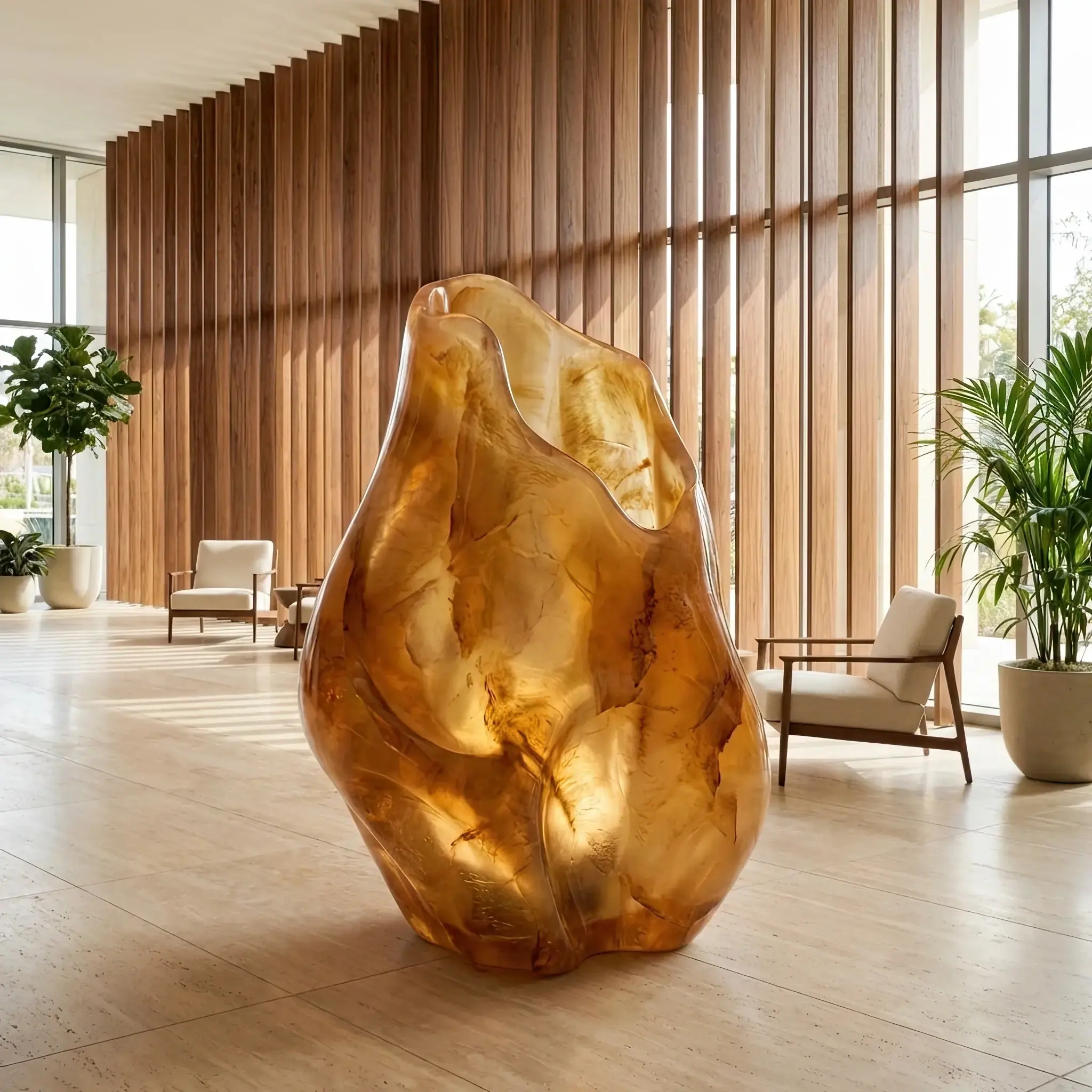
In an era of conscious consumption, materials must be both beautiful and ethical. Bio-Resins are a revolution in custom furniture. Unlike traditional epoxies, they consist of up to 40% plant oils and wood processing waste. We examine how these 'green' polymers allow for creating incredible visual effects — from imitating frozen ice to encapsulating natural objects — and why bio-resin will be a prime attribute of the 2026 eco-friendly lobby.
Polymer Nature: Why It's Not Plastic
Modern bio-resins minimize petroleum usage during production. This isn't just an eco-friendly choice; these resins boast higher UV resistance (no yellowing in sun) and a lower shrinkage coefficient. In 2026, we utilize them for casting massive seamless countertops and decorative reception facades. The material possesses crystal transparency comparable to optical glass, yet it's warmer to the touch and much stronger.
Encapsulation: History in a Frozen Moment
Frozen Time
Bio-resin allows for embedding (encapsulating) any objects into the reception. The 2026 standard in eco-hotels involves resin inserts with frozen rare plant seeds, dry flowers, or even company tech-waste transformed into art. This creates a unique texture one wants to study for hours. You don't just put furniture; you put a museum exhibit broadcasting your brand philosophy.