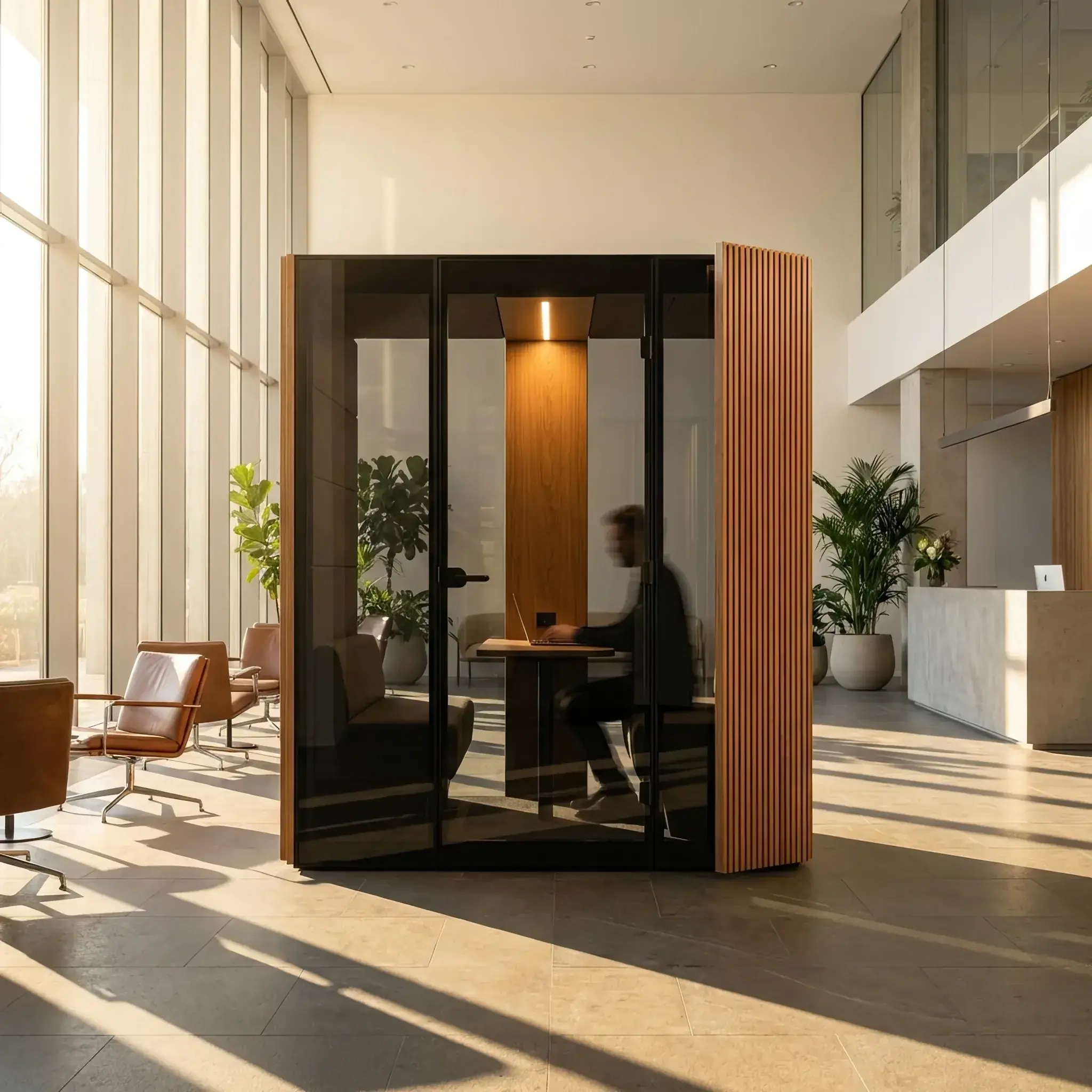
In 2026, hotel lighting has ceased to be static. We have moved toward the 'Lighting Therapy' concept, where every lux and every Kelvin degree is adjusted to the guest's biological clock. In this article, we examine how AI-driven atmospheric dimming systems create a seamless transition from day activity to night rest.
Circadian Rhythms and 2026 Design
The human eye has adapted over millions of years to a specific cycle: cool light in the morning, bright sun during the day, and warm fire in the evening. In 2026, we integrate this cycle into lobby architecture. In the morning, the system automatically sets a temperature of 5500K, suppressing melatonin production and helping guests wake up. After 8:00 PM, the light smoothly transitions to 2000K (candlelight color), preparing the nervous system for deep sleep.
This isn't just a matter of comfort — it's a matter of loyalty. A guest whose biorhythm is supported by the hotel's lighting feels better, experiences less jet lag, and subconsciously associates this state with your brand.
Smooth Transition Technology
DALI-2 and AI Controllers
The main engineering challenge of 2026 is making scenario changes absolutely imperceptible. We use DALI-2 protocols with 16-bit dimmers that allow brightness changes in 0.1% increments, eliminating any jumps or flickering. AI analyzes natural lighting levels outside and traffic intensity in the hall, adjusting the scenario every 5 minutes.