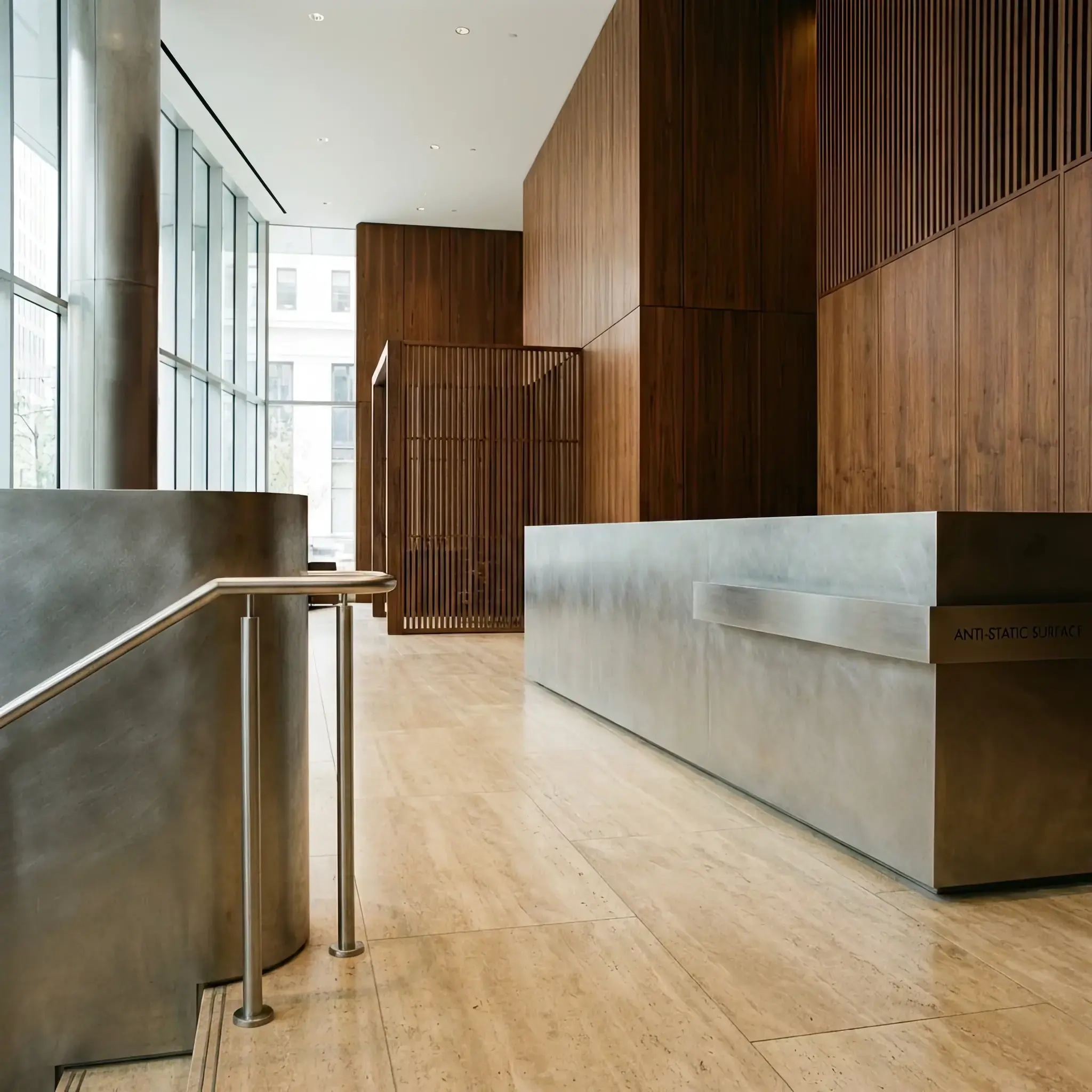
In 2026, against the backdrop of pervasive virtual interfaces, the architectural community has returned to 'honest' materials. Digital Brutalism is a combination of concrete's monumentality and the precision of laser-processed steel details. We examine why raw textures have become a new symbol of reliability and how to integrate concrete into the interior of a premium business center.
The Philosophy of Digital Brutalism
Brutalism in 2026 is not about the raw concrete of the 70s. It is about controlled power. We utilize architectural mixes with graphene additives, allowing for the creation of thin-walled yet incredibly strong structures. Every porous concrete surface contrasts with the perfect geometry of steel elements, creating tension and interest within the space.
In the era of digitalization, touching cold, textured concrete returns the guest to reality, creating a sense of 'fundamentality' for the company. This is particularly sought after in the banking sector and the headquarters of industrial giants.
3D Concrete Printing: Architecture Without Limits
Additive Technologies in Furniture
In 2026, we print bases for reception desks on industrial 3D printers. This allows for the creation of internal ribs and cavities for cable management directly within the solid mass. Printed concrete has a unique layered texture that is itself a decorative element, emphasizing the process's technological nature.